
Amelia Taylor – Cornell University College of Veterinary Medicine
How do I know if my cat has worms is a common question, since the signs are not always obvious. Here is a simple checklist to help you spot what to look for.
Signs To Check For
| Sign | What To Look For |
|---|---|
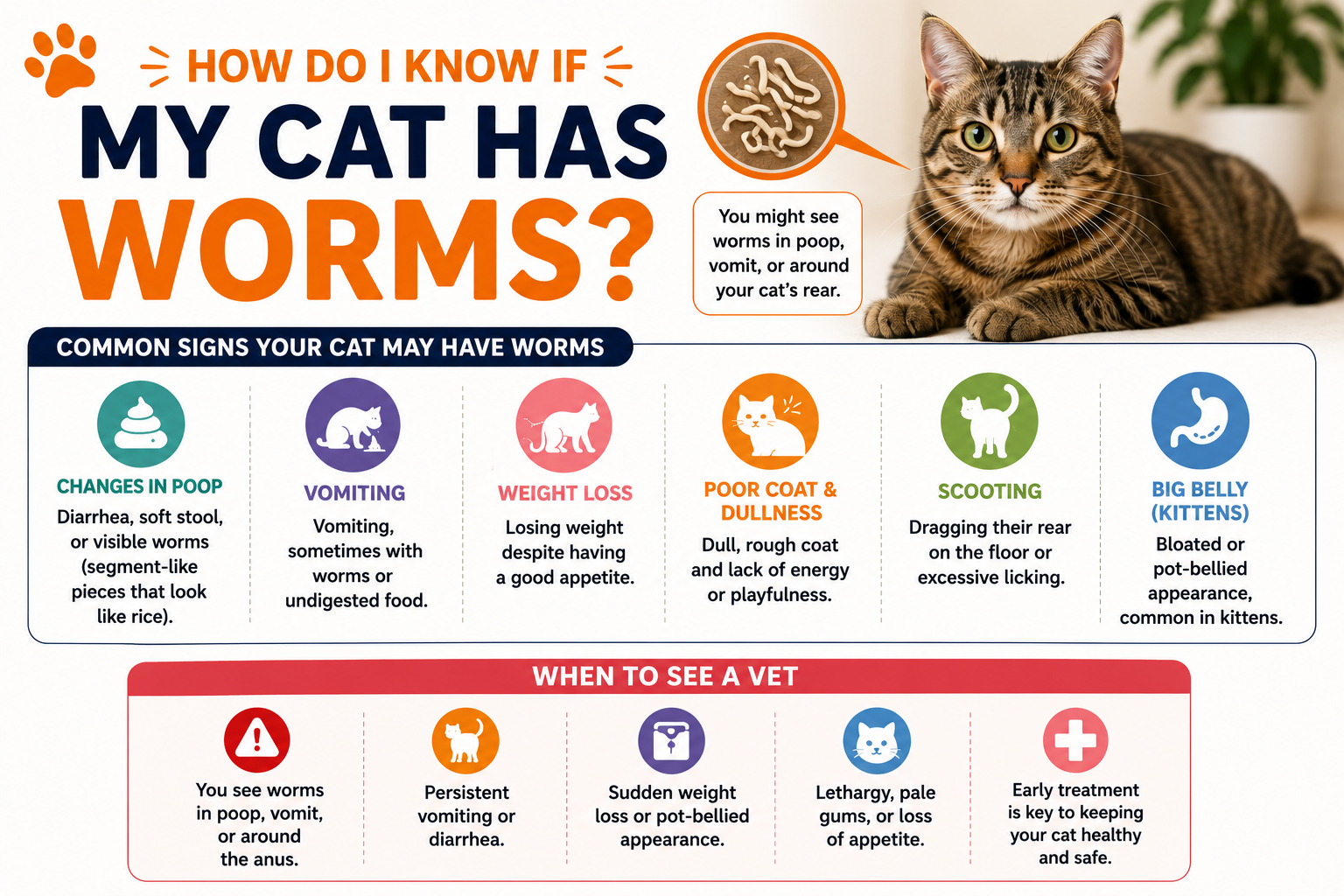
| Visible worms | Small white segments that look like rice grains, or longer worms that look like spaghetti, in stool, vomit, or stuck to fur near the tail |
| Change in stool | Loose stool, diarrhea, or stool that looks slimy from extra mucus |
| Vomiting | More frequent vomiting than your cat’s normal pattern |
| Bloated belly | A rounded or swollen looking abdomen, most noticeable in kittens |
| Coat changes | Fur that looks dull, dry, or unkempt compared to usual |
| Appetite changes | Eating more than usual but still losing weight, or a sudden drop in appetite |
| Low energy | More tired or less playful than normal, for no clear reason |
| Pale gums | Gums that look pale pink or white instead of a healthy pink |
| Scooting | Dragging their bottom along the floor or licking the area more than usual |
A Few Things Worth Knowing
- Some cats show no signs at all, even with worms present, so a clean looking cat is not always a worm free cat
- Kittens are more likely to show visible signs like a bloated belly, since they are more sensitive to nutrient loss
- Outdoor cats and cats that hunt are more exposed to worms than cats that stay indoors
- Fleas are a common way cats pick up tapeworms, so flea control plays a role in prevention too
Why These Signs Overlap With Other Issues
Many of these signs, like vomiting or low energy, can also point to something unrelated to worms. That is exactly why checking your cat’s stool and litter box regularly is so useful. It gives you a clearer picture than guessing from behavior alone.

What To Do If You Notice These Signs
A stool sample check is the most reliable way to confirm what is going on, since some worms are too small to see with the naked eye. Bringing a fresh sample to your vet is usually all it takes to get a clear answer.
According to Catster, vomiting, diarrhea, a dull coat, and appetite changes are among the most common signs owners notice first. Small Door Veterinary also notes that pale gums and a change in stool color can point to blood loss from certain types of worms.
If you have also noticed flaky skin along with these changes, our guide on why your cat has dandruff covers that separately.