
Amelia Taylor – Cornell University College of Veterinary Medicine
Why does my cat twitch in his sleep is a question almost every cat owner asks at some point. In most cases, the answer is simple and nothing to worry about.
He Is Likely Dreaming
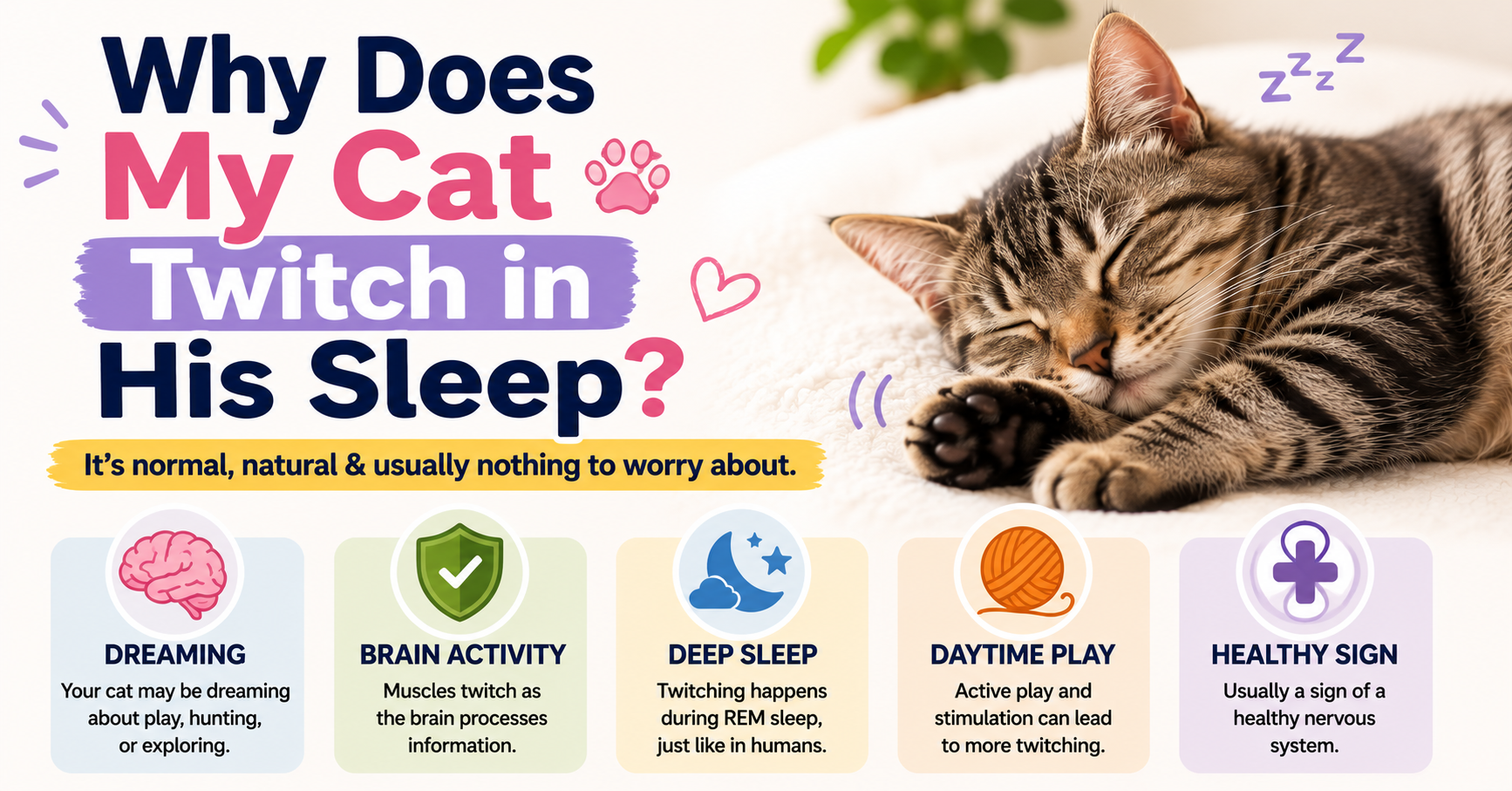
Cats go through sleep stages just like people do, including a deep stage called REM sleep. This is when the brain becomes very active, even though the body stays mostly still. During REM sleep, your cat’s brain may be replaying parts of his day, like chasing a toy or watching a bird outside. That inner activity can show up as twitching paws, flicking whiskers, or a moving tail.
Kittens Twitch More Than Adult Cats
If you have a kitten, you may notice more twitching than you would in an older cat. Young cats spend more time in REM sleep because their brains and bodies are still developing. As cats grow older, they tend to settle into calmer sleep with less movement.
Small Sounds Are Normal Too
Along with twitching, you might hear soft chirps, tiny meows, or quiet purring while your cat sleeps. These small sounds usually go hand in hand with dreaming and are not a sign of pain or distress on their own.
Brain Activity
Sometimes a cat twitches while falling into a deeper stage of sleep, similar to the sudden jerk people feel right before drifting off. This kind of twitch is quick, happens once, and does not repeat itself over and over.
When to Pay Closer Attention
Most sleep twitching is harmless, but a few signs are worth watching for. If your cat’s whole body stiffens, if the movement looks more like shaking than twitching, or if it continues after your cat wakes up, it may be worth a call to your vet. The same goes for twitching that shows up while your cat is fully awake and alert, since that is different from normal dream movement.

Let Sleeping Cats Sleep
It can be tempting to wake your cat when you see him twitching, especially if it looks like a bad dream. It is usually best to let him be. Waking a cat mid dream can startle him, and this kind of movement is a normal, healthy part of a good night’s rest.
According to PetMD, twitching during sleep is generally a sign of a vivid dream rather than a health concern. Purina also notes that facial twitching, ear movement, and occasional sleep sounds are all part of normal feline rest.
If you are curious about other everyday habits, our guide on why your dog is shaking so much breaks down a similar question for dog owners.