
Amelia Taylor – Cornell University College of Veterinary Medicine
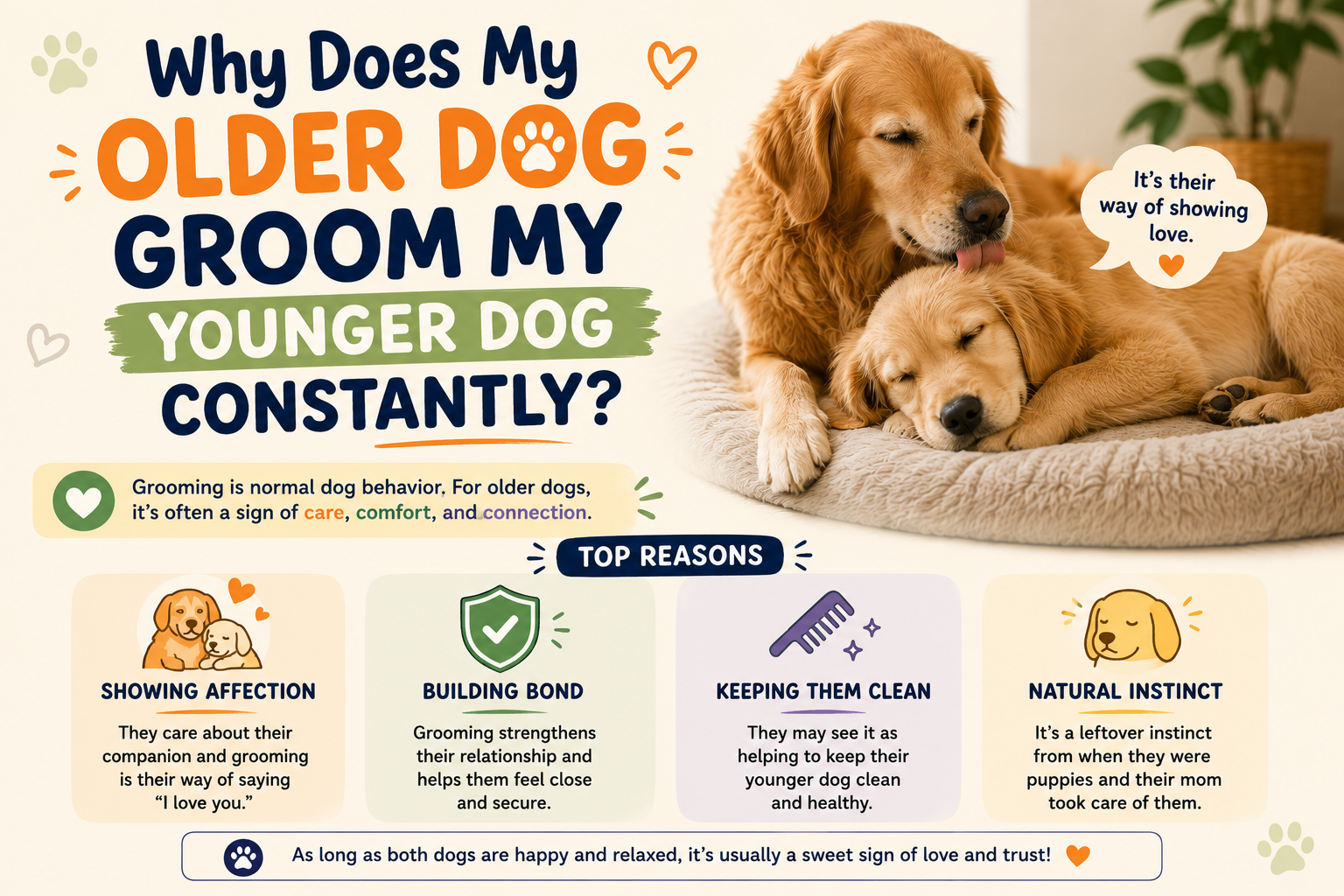
Have you noticed your older dog spends a surprising amount of time licking and cleaning your younger dog, almost like a parent tending to a pup? If you keep asking why does my older dog groom my younger dog constantly, this caring habit is more common than most owners realise, and it usually points to a strong bond.
Common Reasons Older Dogs Groom Younger Dogs
This behaviour is generally a warm, natural part of how dogs relate to each other. Here are the main reasons behind it:
- Nurturing instinct. Older dogs, especially those who have raised puppies before, often carry a natural urge to care for younger dogs in the household
- Bonding and trust. Grooming is one of the clearest ways dogs build closeness with each other, similar to how mutual grooming works in many social animals
- Calming behaviour. Licking releases calming chemicals for both dogs, so your older dog may be soothing the younger one, and himself, at the same time
- Establishing gentle guidance. Grooming can be a soft way for an older dog to set social boundaries without conflict or aggression
- Curiosity about scent. Puppies and younger dogs often carry new smells from play, food, or the outdoors, which can prompt an older dog to investigate through grooming
Is This Behaviour Something to Worry About
In almost all cases, this is a sign of comfort and connection rather than a problem.
Keep an eye out for:
- Grooming that becomes so intense it causes bald patches, redness, or irritated skin
- The younger dog trying to pull away repeatedly without the older dog stopping
- A sudden change in this habit paired with signs of stress in either dog
If you notice these signs, it is worth checking in with your vet or a local clinic such as Greencross Vets.
Supporting a Healthy Bond Between Your Dogs
You do not need to discourage this behaviour, but a few small steps can help keep things balanced.
- Make sure the younger dog has the option to move away freely if he wants a break
- Keep grooming sessions in check if they start lasting unusually long or becoming repetitive
- Offer separate enrichment and one-on-one time with each dog, which the RSPCA’s pet care guidance recommends for balanced multi-dog households
- Reward calm, gentle interactions to reinforce a relaxed dynamic between your dogs
A Sweet Sign of Canine Companionship
Most of the time, an older dog grooming a younger one is simply a heartwarming display of care, trust, and connection. It is one of those small, touching habits that make life with multiple dogs so rewarding.
Curious about other quirky ways your dogs show their bond? Read our post on Why Does My Dog Copy My Cat?

Frequently Asked Questions
- Is it normal for an older dog to groom a younger dog often?
Yes, this is a common and usually affectionate behaviour, especially in dogs who have bonded closely or lived together for a while. - Does grooming mean my older dog sees himself as the leader?
It can be part of gentle social guidance, but modern understanding of dog behaviour views this more as bonding than strict hierarchy. - Should I stop my dog from grooming the other dog so much?
Only if it starts causing skin irritation or if the younger dog seems uncomfortable and cannot get away. Otherwise, it is fine to let it continue. - Why does my younger dog not groom my older dog back as much?
This is common, as grooming roles are not always equal. It often depends on each dog’s personality and comfort level.