Amelia Taylor – Cornell University College of Veterinary Medicine
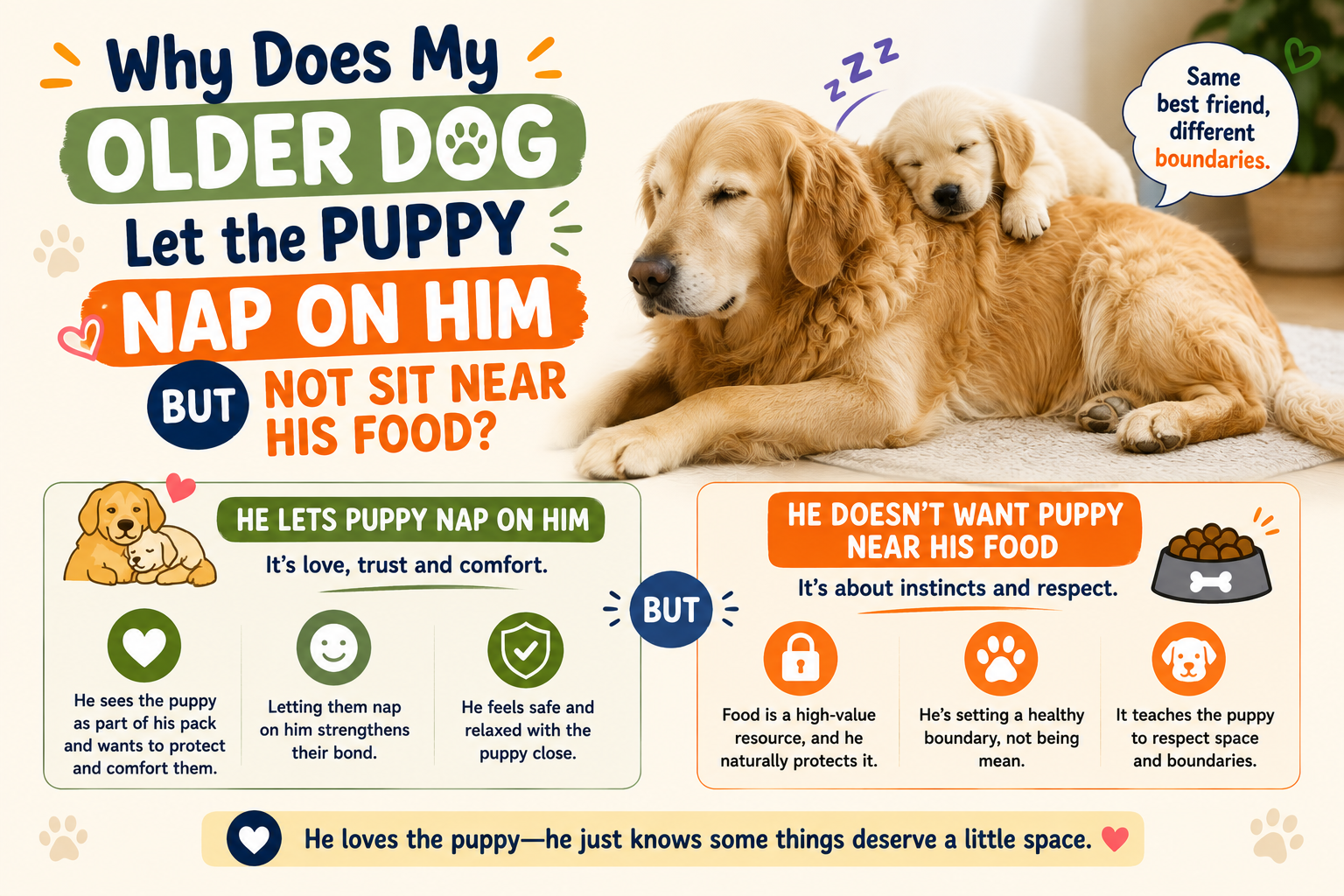
Have you noticed your older dog happily letting the puppy curl up on top of him for a nap, yet stiffening the moment that same puppy wanders near his food bowl? If you keep asking why does my older dog let the puppy nap on him but not sit near his food, this contrast makes more sense once you understand how dogs separate affection from resources.
Common Reasons Behind This Contrast
This is a very normal pattern in multi-dog households and comes down to different instincts governing different situations. Here are the main reasons behind it:
- Resource guarding instinct. Many dogs are naturally more protective of food than of physical space, since food has always been a survival priority
- Comfort versus competition. Napping together is a bonding moment with nothing at stake, while food can trigger a much older instinct to protect a valuable resource
- Learned tolerance. Your older dog may have simply learned that cuddling with the puppy is safe, while food closeness has led to tension before
- Individual personality. Some dogs are naturally affectionate but still firm about personal boundaries around meals, and this is not a contradiction in their eyes
- Establishing calm boundaries. Allowing a nap but not tolerating food closeness can be your older dog’s way of setting clear, consistent rules for the puppy
Is This Behaviour Something to Worry About
In most cases, this is simply healthy boundary setting and not a sign of aggression or a deeper problem.
Keep an eye out for:
- Growling or snapping that seems intense rather than a calm warning
- The puppy failing to back off after a clear signal from the older dog
- Tension around food that seems to be increasing rather than staying consistent
Helping Mealtimes Stay Calm
You do not need to stop the napping, but a few simple steps can help keep food time stress free for both dogs.
- Feed your dogs in separate spaces or bowls set apart to remove the chance of competition
- Supervise mealtimes so you can step in calmly before any tension builds
- Reward the puppy for keeping distance during meals, which helps build good habits early
- Offer enrichment like puzzle feeders, which the RSPCA’s pet care guidance recommends to reduce food related stress in multi-dog homes
Two Instincts Working Together
Most of the time, an older dog who welcomes naps but guards his food is simply showing that affection and resources are two very different things in his mind. It is one of those everyday contrasts that make life with multiple dogs so interesting.
Curious about other quirky dog and cat contrasts in your home? Read our post on Why Does My Dog Copy My Cat?
Frequently Asked Questions
- Is it normal for a dog to be affectionate but protective of food?
Yes, this is common. Comfort and resource guarding are separate instincts, so a dog can be relaxed in one area and firm in another. - Should I let my puppy try to sit near the older dog’s food bowl?
It is safer to supervise closely or keep feeding areas separate, especially while the puppy is still learning household boundaries. - Does food guarding between dogs mean they do not get along?
Not necessarily. Many dogs who guard food closely are still deeply bonded in every other part of their relationship. - When should I be concerned about food related tension between my dogs?
If warnings escalate quickly, happen with no space for the puppy to back off, or involve real aggression, it is worth consulting a vet or trainer.