
Amelia Taylor – Cornell University College of Veterinary Medicine
Normal Dog’s Breathing Rate
A calm, resting dog usually breathes between 15 and 30 times a minute. This number can shift a bit depending on your dog’s size, age, and activity level, so it helps to know what is typical for your own dog when they are relaxed.
Exercise Is The Most Common Reason
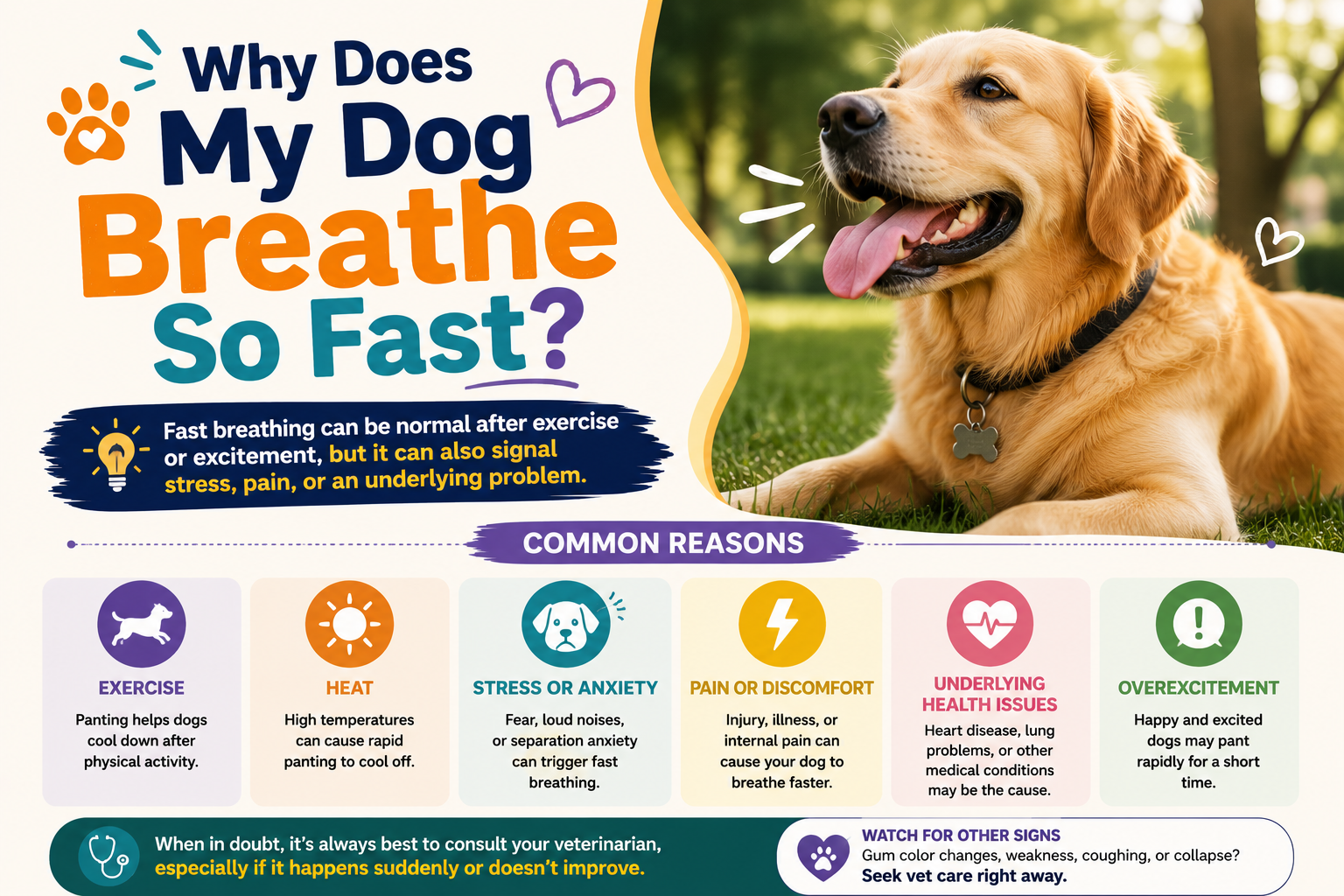
After a walk, a play session, or a run in the yard, it is completely normal for your dog to breathe quickly for a while. Dogs cannot sweat the way people do, so they rely on panting to cool their bodies down. Breathing should slow back to normal once they rest and cool off.
Heat Can Speed Things Up Fast
Warm weather is one of the biggest reasons dogs breathe faster than usual. Panting helps dogs release heat, so on hot or humid days, expect faster breathing even without much activity. This is worth watching closely, since dogs can overheat quickly if they do not have shade, water, and a chance to cool down.
Excitement And Stress Play A Role Too
A visit to somewhere new, a car ride, or even a knock at the door can speed up your dog’s breathing for a few minutes. This kind of fast breathing usually settles down on its own once your dog calms down and feels comfortable again.
Certain Breeds Breathe Faster By Nature
Flat faced breeds like bulldogs, pugs, and boxers often breathe harder and faster than other dogs, even at rest. Their shorter snouts make normal breathing a bit more work, so faster breathing can simply be part of how these breeds are built.
When It Is Worth A Closer Look
Fast breathing while your dog is fully at rest, especially during sleep, is different from panting after a walk. The same goes for breathing that sounds noisy, looks like real effort, or comes along with weakness, pale gums, or not wanting to move. These signs are worth paying attention to and getting checked out.

A Simple Way To Keep Track
Counting your dog’s breaths for 30 seconds while they are calm and resting, then doubling that number, gives you their breathing rate. Doing this occasionally when your dog is healthy helps you know their normal, so you can spot a real change later.
According to GoodRx, tracking your dog’s breathing rate at rest is one of the simplest ways to notice a meaningful change early. AKC also points out that flat faced breeds, older dogs, and overweight dogs tend to be more sensitive to heat and fast breathing overall.
If your dog also tends to shake or shiver, our guide on why your dog is shaking so much covers those causes too, since the two often show up together.