
Amelia Taylor – Cornell University College of Veterinary Medicine
Why is my dog breathing heavy while resting is different from breathing hard after a walk. Resting breathing tells you a lot, so here is a simple way to check it.
What Counts As Normal
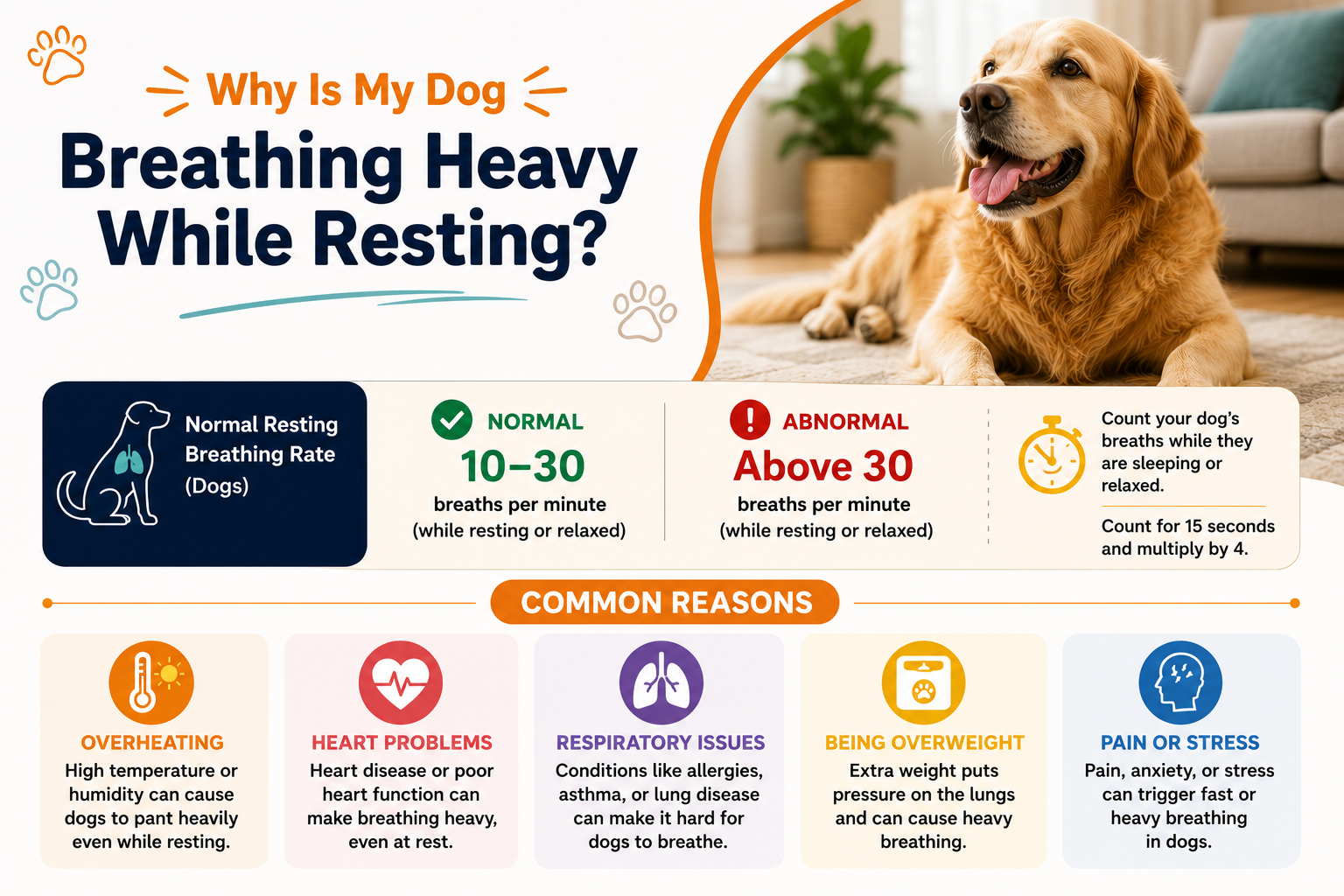
A healthy dog resting or sleeping usually breathes at a steady, calm pace. Here is what that looks like in numbers.
| Situation | Normal Range | What It Looks Like |
|---|---|---|
| Resting calmly (awake) | 15 to 30 breaths per minute | Smooth, quiet, chest rises and falls evenly |
| Sleeping | 15 to 30 breaths per minute | Slow, steady, sometimes with soft twitching |
| After exercise or play | Faster, but settles within 10 to 20 minutes | Open mouth panting that fades as your dog cools down |
| Hot weather | Faster than usual | Panting that slows once your dog is cool and calm |
When Heavy Resting Breathing Is Worth A Closer Look
Breathing heavy while your dog is calm, cool, and not active is different from panting after play. Here are signs that mean it is time to pay closer attention.
| Sign | Why It Matters |
|---|---|
| Breathing rate consistently above 30 per minute at rest | This is outside the normal range for a resting dog |
| Breathing looks like real effort (belly pushing in and out) | Normal resting breathing should look easy, not labored |
| Gums look pale, blue, or grayish | This can mean your dog is not getting enough oxygen |
| Breathing with a mostly closed mouth while still fast | Panting is usually open mouthed, so this pattern stands out |
| Restlessness, pacing, or trouble settling down | These often go along with breathing changes worth noting |
Everyday Reasons It Can Happen
- Warm rooms or a warm spot in the sun can raise your dog’s breathing rate even while lying down
- Recent excitement, like a visitor at the door, can carry over into a faster resting rate for a few minutes
- Overweight dogs and flat faced breeds like bulldogs and pugs often breathe a bit heavier than average, even at rest
- Older dogs may naturally breathe a little faster than younger, more active dogs
A Simple Way To Track It At Home
Count your dog’s breaths for 30 seconds while they are calm and resting, then double that number. Do this a few times when your dog seems totally normal and healthy, so you know their usual baseline. That way, if something changes later, you will notice it right away instead of guessing.

The Bottom Line
Occasional heavy breathing after activity or in the heat is normal and nothing to worry about. Heavy breathing that shows up while your dog is calm, resting, or asleep is the pattern worth watching, especially alongside pale gums, real effort, or restlessness.
According to Trudell Animal Health, a resting breathing rate that consistently runs above 30 breaths per minute is considered outside the normal range. GoodRx also notes that pale, dark red, or blue colored gums are a clear sign your dog’s breathing needs a closer look.
If your dog also breathes fast during activity or excitement, our guide on why your dog breathes so fast covers those everyday causes in more detail.